Professor Ezechiel Oladapo Longe is a Professor of Water Resources and Environmental Engineering at the University of Lagos. An international expert on groundwater and wastewater management, he had previously served as Chairman and Member of the Regional Technical Committee of the Global Water Partnership West Africa (headquartered in Burkina Faso) between 2013 and 2015.
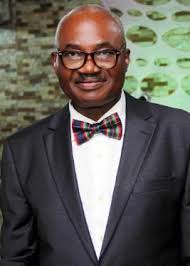
Born in 1956, he earned his B.Sc. and M.Sc. in Geology and Applied Geology from Obafemi Awolowo University (formerly University of Ife), and a PhD in Water Resources/Environmental Engineering from the Université des Sciences et Techniques du Languedoc, Montpellier, France.
His research focuses on groundwater hydraulics, contamination, and sustainable water resource management, particularly in coastal aquifers such as those in Lagos. He recently delivered the 449th Inaugural Lecture of the University of Lagos, titled “Unlocking the Hidden Treasure: The Complexity, Availability, and Vulnerability of Groundwater Resource,” where he emphasised the critical importance of groundwater management, its hidden potential, and the growing risks it faces in the context of environmental change and increasing demand.
Beyond academia, he is a Church Pastor and plans to celebrate his 70th birthday later in the year.
He spoke to Dr Babatope Babalobi, on water issues in Nigeria.
Highlights:
- Failure of water systems is primarily due to poor management, not lack of resources — He emphasises that “our problem is not the resource; it has to do with human management, technology know-how, and government roles.”
- Community involvement and maintenance are critical to sustainable water infrastructure — He notes that “unless the host communities own it and are taught how to manage it… failures will continue.”
- Unregulated groundwater exploitation poses a serious future disaster risk — He warns that “reliance on boreholes and groundwater in Lagos without regulation is going to bring what I call a water disaster soon
- Unregulated groundwater exploitation could cause major cities like Lagos and Port Harcourt to sink. He warns that “Lagos… may completely subside in the next 75 to 80 years” and highlights severe subsidence already observed in coastal areas.
- Groundwater is finite and must be used sustainably with proper recharge balance — He explains that “if extraction… is greater than the rate at which groundwater is being replenished, then there’s going to be a problem.”
- Cultural attitudes and weak policy implementation worsen environmental and waste challenges — He states that “we are culturally dirty… we need reorientation… perception must change.”
Full interview
Since most of the 36 state water corporations that deliver water services mainly through surface water schemes, are not performing very well, shouldn’t we start to focus more on harnessing groundwater resources?
The same challenge that we have today, which contributed to inadequate water supply through streams and rivers, also exists regarding groundwater supply. We should ask ourselves what were responsible for failures of surface water and groundwater sources, especially in the supply of potable water to the populace in terms of quantity and quality in Nigeria.
And what are these problems that have defied solutions?
I will itemise them one by one. We carried out research in 2009, you know, looking at 43 communities in the Ibeju-Lekki axis of Lagos State. And what we really looked at was the appraisal of water supply facilities in those areas. Will you just imagine that almost all the boreholes in those 43 communities fitted with hand pumps failed? They all failed. 6% of those fitted with electric pumps also failed. Only 37% hand dug wells failed. So, the highest productivity has to do with a dug well. Then one can say here that technology is likely to be the challenge.
And the same thing in Ipokia, Ogun state. In a recent study carried out by my team in 2024, only 69% of water supply facilities were found operational. Common problems were inadequate pump systems, maintenance problems, pumps were out of use, no replacement, the failure of these suppliers, and those that came to fix these boreholes failed to integrate the community into the project. You know, in such a situation, there must be management at the village level and community level of this infrastructure. Unless the host communities own it and are taught how to manage it, I want to tell you failures will continue.
So, since surface water systems are failing and groundwater systems are also failing, should everyone be on their own and maybe focus on ho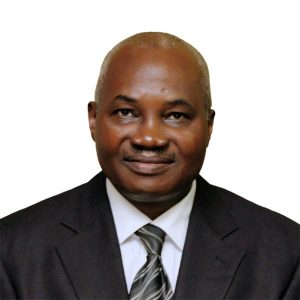 usehold water treatment?
I don’t think that is the solution. It is more than that. That will create more problems, especially for the resource, in terms of groundwater. Groundwater is a delicate resource, very hidden, and at the same time, even though we don’t see it, it is a finite resource that can be used up.
Therefore, there is a need for effective, integrated management to ensure we use of the resource sustainably. I will not say everybody to their own. I think we still need to go back to the government.
The failure of successive governments, whether at the national or state levels, has contributed to where we find ourselves today.
Let me bring you back to the memory lane. In the early 80s, the Lagos State government decided to construct 12 mini waterworks across the state. I happened to work on six of them. By the time I left the country for my PhD, I left towards the end of 1984. I came back in 1989, April, before I was engaged with the University of Lagos. I took my research team to all six mini waterworks that I had the privilege of working on. Within the space of 10 years, they had broken down, and none of them was working. It was a massive project with millions of naira.
If you’re asking why? The problem was a lack of maintenance, a lack of understanding of groundwater resources, the belief that the groundwater is there and we can abstract it anytime we like, without recourse to what I call replenishment or recharge of the groundwater.
So, our problem is not the resource; it has to do with human management, technology know-how, and government roles, in terms of policy, guidelines, and regulations.
And when all these are missing, I want to tell you it’s going to be a problem. Without regulating groundwater abstraction, drilling of boreholes, and the amount of water that can be taken from the underground, I will say that we are heading to a serious problem in this nation, and especially in Lagos, because the pressure on groundwater has its own negative effects.
I want to say this: if communities are organised and we have competent people, we have it abroad ……. they lease out companies that can supply water to some communities, and it is profit-oriented, and they operate under government policies, guidelines, regulations and laws, then the solution to water shortage is in view. If we can be disciplined enough to do that, I can tell you that it is something that can work. But I would say that individuals doing that, especially in the coastal environment, will create more problems for us. I think the best bet is that the government should rise to its duty of making potable water available to the populace, even if it is going to be at a cost.
Talking about groundwater over abstraction, I think corporate bodies are mostly involved. But is there evidence that corporate bodies overabstract groundwater resources, thereby violating the right to water of the host communities?
Where there is no law, there is no sin. In Lagos State, for instance, LASWACO, that is, Lagos State Water Regulatory Commission, is responsible for the management of groundwater; they are also responsible for the permitting process to monitor usage of groundwater. In terms of laws and regulations, Lagos State Water Regulatory Commission has the law, but the problem, to me, has to do with enforcement, and this also has to do with the will of the government.
I know it is not only water-intensive companies that are drawing down the water table of the aquifer in Lagos. Whatever is happening with manufacturing companies, not very many studies have been carried out, but
I want you to note it, one of them that I know, especially the famous beer stout producing company in Ikeja, Lagos State…they don’t tap from the first or second aquifer; they tap from the third Aquifer that is very deep. Most residents in Lagos, especially individuals, derive their domestic water supply mostly from the first or the second aquifer horizon.
But if I put it like this, whether it is those industries or individuals, the point is that it is very difficult today for an individual to accuse a manufacturing company of depleting the groundwater resource, and as a result, they can’t take them to court. We don’t have such information on the conflict of groundwater usage because there has not been any case like this or research to show that.
Our Groundwater Team from the University of Lagos have been monitoring groundwater levels in parts of Lagos State for the past four years, and we have seen that there is a general decline in water level in Lagos, both where we have industrial estates and among individual users.
And this is a pointer to the fact that reliance on boreholes and groundwater in Lagos without regulation is going to bring what I call a water disaster soon.
But normally, if Lagos State Water Regulatory Commission can monitor the abstraction of groundwater by individual companies, because they will have a license, and if they monitor it, they are the ones who will correct them, but for now, we don’t have that.
How do you think that commission can be strengthened?
I think what the Lagos State Government needs to do with the Regulatory Commission is more of advocacy. You know, you don’t come up with regulations, rules, policies, and guidelines without what I call a proper stakeholder engagement. If it is done in isolation without appropriate stakeholder engagement, taking into consideration all those who are involved in groundwater abstraction, there are bound to be challenges of implementation. The state government should do more for advocacy, in-house cleaning, and let it understand its mandate and rise to defend that mandate. The Commission should embark on a lot of sensitisation drives, and it is not too late to do this. You know, anything that is good and at the same time requires sacrifice, following the rules, people always revolt against it.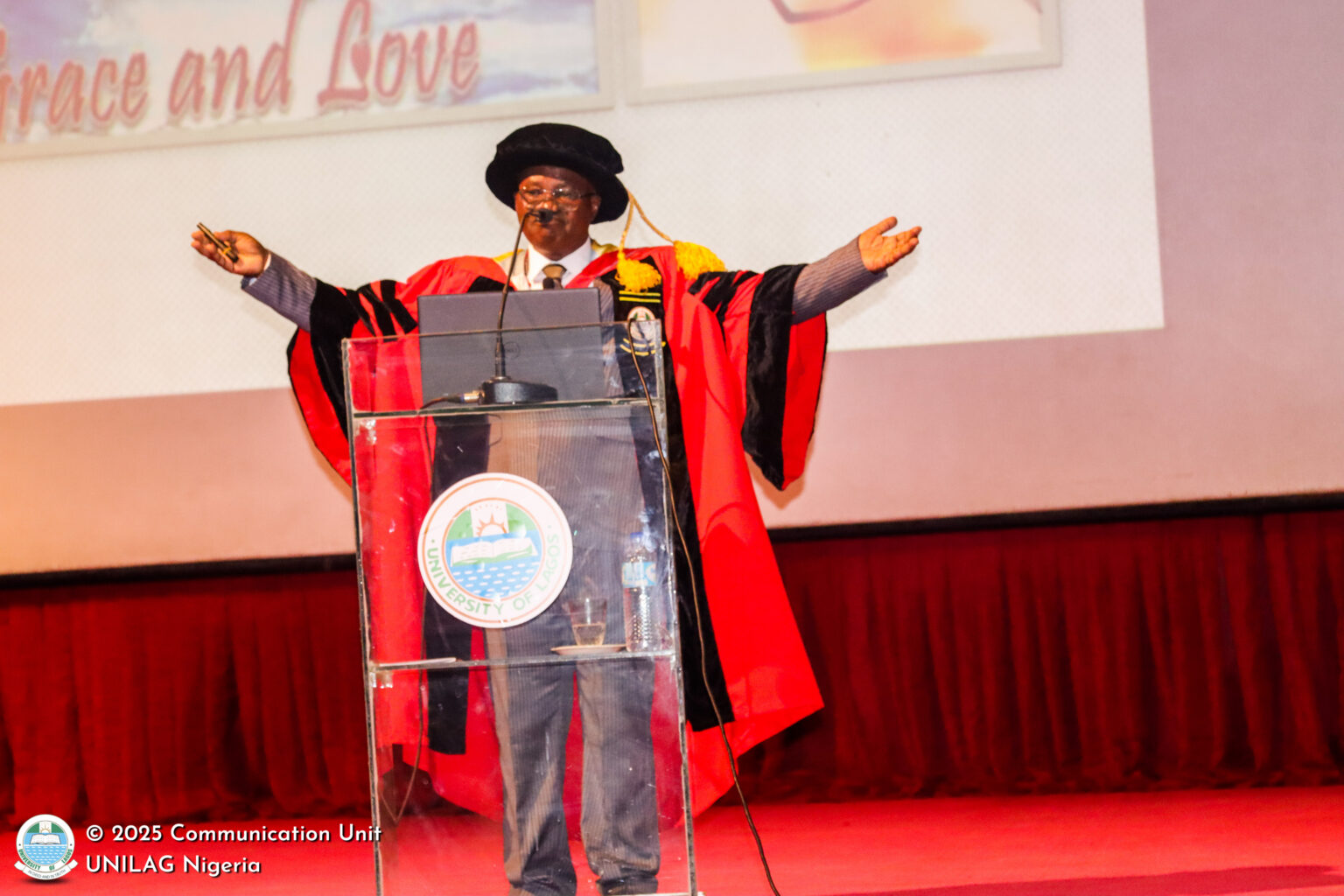
I have heard an official of Lagos State Government saying that Lagos State Water Regulatory Commission want to act as their boss. Lagos State Water Regulatory Commission has the Act that sets it up. It is not the boss of Water Corporation, but if Water Corporation wants to harness both ground and surface water, the Lagos Water Corporation must follow the rules. I think that is where the problem is. Is the government ready to back it up, or is it just another commission to fulfil all righteousness?
You mentioned earlier that there could be a water disaster soon. What is the nature of this disaster, and what are the implications for all stakeholders?
Okay, one, unregulated groundwater abstraction can lead to so many things. One of them is subsidence. Though we cannot see subsidence with our eyes, because in some cases it is in millimetres per year. And if that continues, we will begin to have uneven settlement of infrastructure due to unprotected and unregulated groundwater abstraction. Not only that, but groundwater pollution could also be a problem as well, either in terms of saltwater intrusion, because we are in the coastal environment.
For instance, I can tell you for sure that in Nigeria today, especially in coastal cities such as Port Harcourt, Uyo, and Lagos, it has been inferred that the highest subsidence of up to 250 millimetres per year has been found in Port-Harcourt area, because of the pumping of water and also the pumping of oil. Such a case in Port Harcourt can cause a fire disaster, especially in oil platforms due to uneven settlement, and it can also cause what I call coastal erosion, an ingress of water because of uneven settlement, which can also lead to flash floods.
And it has been postulated that Lagos, especially, is among cities that, if care is not taken, may completely subside in the next 75 to 80 years. Research indicates that Lagos is experiencing land subsidence, with certain areas sinking at rates between 2 mm and 87 mm per year. This subsidence is attributed to factors such as groundwater extraction and rapid urbanisation, which exacerbate the effects of rising sea levels. We have the cases of Venice, which today is below sea level, and it has had problems of subsidence. And if care is not taken, with adequate monitoring and regulation of groundwater abstraction, we may find ourselves in a similar situation soon.
Is there evidence to back these assertions?
There is evidence in the University of Lagos, in the Survey and Geomatic Engineering, which started research many years back on land subsidence. One of my colleagues was part of that research but was late now, and he wanted us to work together, and he got a grant, trying to measure the rate of subsidence in the coastal area in Lagos. I can tell you that subsidence is occurring in Lagos and in other coastal environments. More research needs to be done so that we can have actual figures to help us in the management of our coastal environment, the management of water resources, especially groundwater in the coastal area, which can lead to subsidence and disaster.
As I said, in Port Harcourt, subsidence has been observed up to 520 millimetres per year. which means in 100 years from now, we multiply 520 by 100. That will be 520,000 millimetres, and 100 millimetres make a centimetre. So, if we look at it, divide by 1,000, then we know that in terms of metres it’s a huge number. And you can just imagine if a subsidence of 1 metre is noticed in Lagos, already, most coastal areas in Lagos are below the sea level. Just imagine what is happening in Lekki and Ajah during the rainy season; they are flooded, it will be just a joke compared with what is going to happen soon.
So, are you insinuating that maybe 75, 80 years, if this unregulated system continues, these cities could be run over by water?
Not all the cities. It’s only areas that are close to the lagoon and to the sea.
Like Lagos and Port-Harcourt?
Yes. But in the hinterlands like Agege, Shasha, Ikeja, no, because at least we still have areas with more than 50 to 100 metres above the sea level. They may not be affected. From UNILAG down to Ikoyi, to Lekki and so on. These are vulnerable areas in terms of subsidence.
When people hear these kinds of report, similar to reports of potential earthquakes in Nigeria, they dismiss them as false alarms.
You know, let me say this categorically. In terms of earthquakes, I can tell you for sure, Nigeria is not in the earthquake zone. Nigeria is generally considered to be a region of low to moderate seismic activity. Hence, the country is not typically known for major earthquakes. However, the country can experience earthquakes. And in terms of earthquakes, we’ve had some cases across the country: – Ondo state, Lagos and Jos in the past.
Water is part of the system that holds the earth and sustains it, and this is real geology because if you take something from under the ground and there is no replacement, then it is bound to sink. It is like a balloon that is deflated. So, everything joined together is supporting the Earth system. And that’s why we talk of replenishment.
We must abstract groundwater resources in a sustainable manner, whereby the recharge or the extraction is equal to the recharge. What I mean by recharge is that you take out water, and you allow groundwater to replenish itself. If extraction or abstraction is greater than the rate at which groundwater is being replenished, then there’s going to be a problem. That’s why I prefer to use the word subsidence, because subsidence is localised. It’s not like a tremor.
Geologically, we are not in an active zone of a volcanic eruption or of earthquakes. If urgent action is not taken and we abstract groundwater more than what the ground itself can replenish, then there’s going to be subsidence locally.
Subsidence is the sinking or settling of the Earth’s surface, often caused by the collapse of underground cavities (e.g., caves, mines); soil compaction and withdrawal of groundwater or oil. It will not be an earthquake. Those who say a tremor is not possible because they base it on a geological phenomenon, which is correct to some extent. But eaarthquakes can occur because of human activities such as mining.
What is the meaning of subsidence for a layman?
Let me just say sinking. Let me explain further, you have the earth’s surface anywhere in the world, and if you dig down, you will get to water, and the more you dig, the deeper you get to the earth’s crust, and the deeper you go, you can get to where everything is liquid, that is geology. And you have, you know, minerals that are very essential and key to development. But like I’ve already explained, I don’t know if you have seen a foundation-laying ceremony or foundation-laying in a waterlogged environment. You know, unless the water is subdued, it will be very difficult to lay the foundation.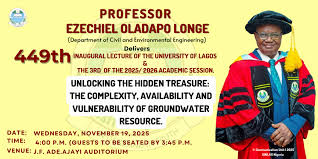
So water is underground, and even our buildings that are standing, some are standing on solid rock, some are standing on solid clay, and below that clay, you may have water. And if the water under the clay is taken, the weight of the superstructure will compress the clay, and it will go down. And that is the reason why you see in Lagos some buildings that are tilting, which is due to uneven settlement, and sometimes because of the nature of the soil, which is clay, some are organic.
During the rainy season, clay becomes expansive. It can take in water. Then, during the dry season, what happens, then the water can be expelled, and it begins to go down. So, this phenomenon is very common in coastal environments, especially in Lagos. I want you to pay attention to it. If you come to Ilaje in the Bariga area of Lagos State, in fact, where we have water, you will see some buildings that are really sinking.
That is a kind of sinking that we are talking about: differential settlement. And if you now take water, abstraction that is more than the groundwater recharge, then that will lead to sinking or what you call subsidence. So, they all go together, but they can be managed, as I said, through Integrated management of water resources, not only groundwater management, because there is a relationship between groundwater and surface water. Whatever affects surface water will also affect groundwater. So, there is that interrelationship between the two.
I know you are both solid and liquid waste management expert; in Nigeria, waste management is still a very big challenge.
I think my first reaction is policy failure, that is one. Inadequate facilities for the collection of waste. And you know, this other problem is what I call the Nigerian factor. Honestly, we don’t know how many of us are in Nigeria. And if budgeting and planning are based on projected figures, there is the possibility of over-design or under-design. But what I can see today is not over-design, it’s under-design.
The collection of waste network with the use of technology and rickety vehicles for collection is also another problem. Integrated solid waste management is what we need, but I want to tell you we don’t have an appropriate technological system. Lagos State is trying, but unfortunately, in the semi-urban or peri-urban areas of Lagos State, the thing is not effective. It’s not being effective also has to do with the willingness of the people and their perception. Service coverage is very low!
I’m sorry to say, maybe I can say without offending people that we are culturally dirty.
Apology for saying that. We don’t have that sense of keeping our environment clean, especially when it comes to public areas, and this has nothing to do with education. I’ve seen people with the highest degree, a PhD, who will drink water and drop the bottle on the road or highway! It is an eyesore. We need reorientation. We need to unlearn, learn, and re-learn.
Perception must change. Why do we have challenges during the rainy season in Lagos? This is because people will dispose of their solid waste inside the drains. Once it starts to rain, you will see people pouring their waste into the drains. And at the end of the day, they’ll be blaming the government for flooding.
I think the government has a lot to do in terms of advocacy. Then we need to change our perception and attitude. We need to educate ourselves. We need to use good technology, adequate technology. We need to adopt appropriate technology for waste storage, collection, transportation, and recovery of materials that are good for recycling or for reuse, and then the treatment, some will go to an incinerator.
A few months ago, you delivered the 449th Inaugural lecture of the University of Lagos, and in a few months to come, by the grace of God, you’re also going to be celebrating your 70th birthday. What lessons have been learned, and what general advice do you want to give to stakeholders?
Thank you very much. My first reaction is that we should not be tired at all in pushing for a better society. There are several factors affecting us in Nigeria, and especially when it comes to the water sector, which is my area of interest. It has taken a very long time to get to where we are today. People who are coming behind, I think, should continue to push for a better water sector, both surface and groundwater. Continue to push and make sure that we get to where we are supposed to be in terms of water management, water supply, waste management, both solid and liquid. I just say continue, don’t be discouraged, even in academia.
One thing I’m happy about is that in my little way, I have contributed to the training of Water Scientists, Engineers, and experts across the nation. I’m happy that I’ve contributed to the development of curricula in water resources. And I’m happy that I’ve given my quota, both nationally, locally, and internationally, and of West African region, where I was a member of the Global Water Partnership and its President for two years. And we worked on groundwater and so on. A lot of effort is going on. I will just say, let’s keep on doing it. And pray, one day we will get to where we are going. But if we had sat down without doing anything, we wouldn’t have been where we are today.
If there is anything that I will say, maybe a regret, it’s not really a regret. Sometimes I sit down with a level of commitment and input that some of us made, it’s rather unfortunate that we can only get a little dividend from our input. And that makes one think, can we really get there? Maybe not my generation, but I’m very hopeful that, yes, no matter how little the achievement is, let the upcoming generation please build on it. You cannot do anything in haste.
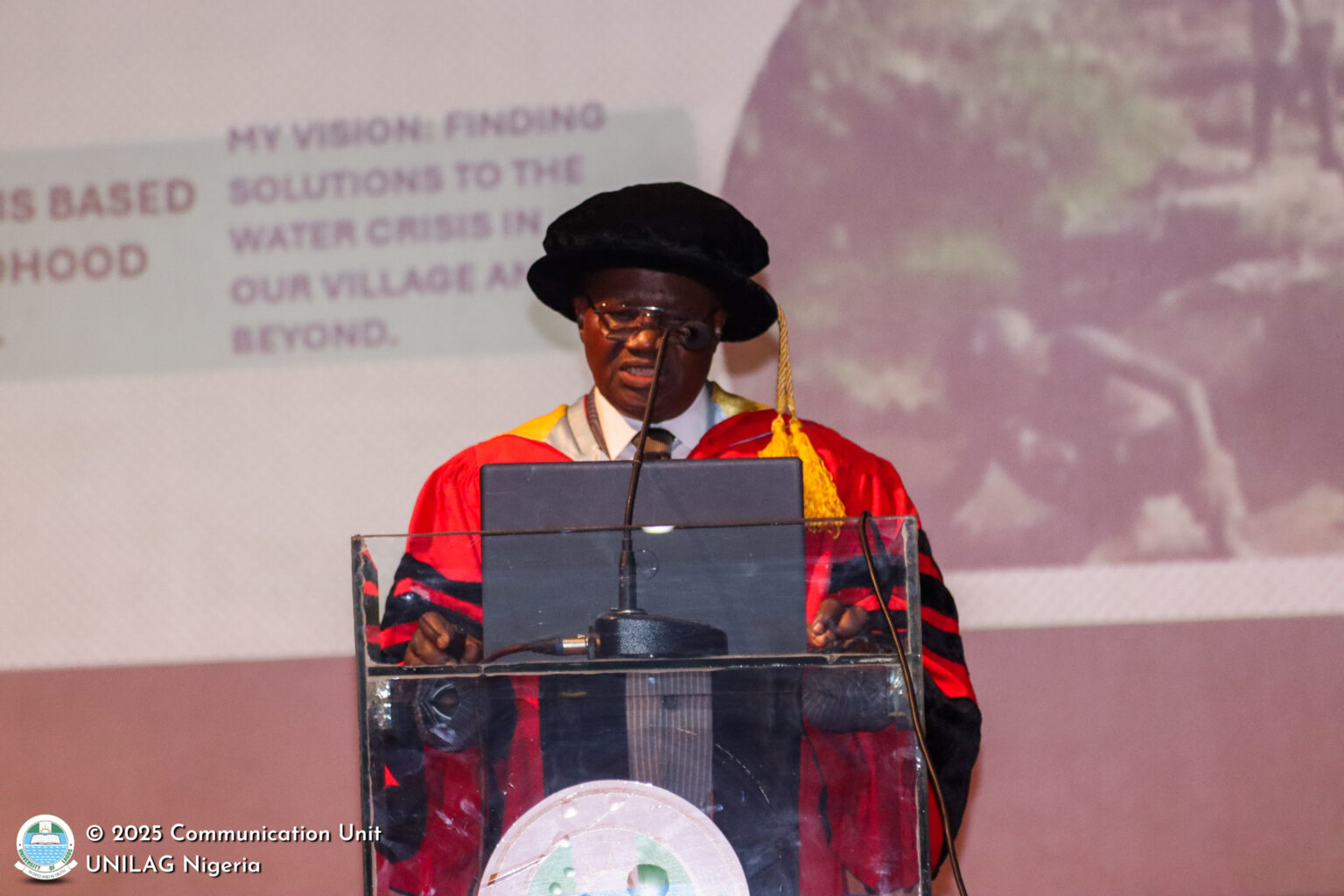
It takes time to build, takes perseverance to build, it takes intentionality to build, and it takes courage to sustain it. If it were not so, it wouldn’t have taken God six days to create heaven and earth, and I want to believe every day that time was saddled with a lot of challenges. And God did not give up. And on the 7th day, he could look back and say, everything I’ve done, they are good. And the Bible say he rested on the 7th day. It is not the time for us to rest. It is time for us to continue to work. And I believe we will get there.
And I want to encourage people like you, also, you have an NGO. Help us to sensitise the people. The way people take water is as if it’s a gift, and you can just use it anyhow. It’s a gift from God, quite all right. It can be abused. It can be used up. And it can dry up. Climate change is not our friend. It’s affecting us day by day. And we should be ready to adapt ourselves to the changing situations. That’s what I call adaptive measures to some of the challenges that are coming from climate change.
We must learn to cope with the situations, and we must continue to put on our thinking caps so that the purpose of God for mankind can be fulfilled. In Genesis 1:28, it says that we should replenish the earth, we should have dominion, we should work on it, and so on. The power is inherent in us; the knowledge is inherent in us; all we need is courage to make the Mother Earth a better place for us all to live in. All the blessings of the Lord, with all these resources, God has given them to us. The man must be able to manage them. I think this is what my conclusion will be.
About the Author








He spoke very well. The problems with Water Supply in Nigeria have not changed for the last 50 years. The major is lack of sustainability mostly due to corruption in both public and private sector. Community Water Supply system also failed in almost all the States in the country due to the same reasons. It must be stated that most political leaders do no understand the problems well.