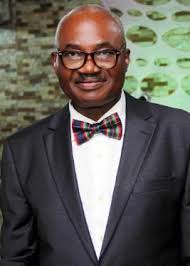
Engr. Ajayi Olumide Ayodeji was the Permanent Secretary of Ekiti State’s Ministry of Infrastructure and Public Utilities (MIPU), Nigeria, for 10 years, during which he coordinated the State Task Group on Sanitation, and supervised several donor reform prorgammes includding the European Union Water Supply and Sanitation Sector Reform Programme Phase III (WSSSRP III), World Bank-funded 3rd National Urban Water Reform Programme, and the World Bank-funded Nigeria Sustainable Urban and Rural Water Supply, Sanitation, and Hygiene Program (SURWASH). Notably, he pioneered regulatory reforms in the sector in the state with the setup of a Regulatory desk office within the MIPU, which has now metamorphosed to Ekiti State Water and Sanitation Regulatory Agency (EK-WASRA)
A fellow of the Nigerian Society of Engineers (FNSE), with over 35 years of experience in infrastructure, utilities, and public sector management in Ekiti State, he retired recently. In this interview with Dr Babatope Babalobi, he spoke extensively on his experiences in office and lessons learnt supervising water, sanitation, and hygiene projects in the state at the highest level, for 10 years.
Key highlights:
- “We pay very little attention to planning.” Weak planning undermines project delivery, costing, stakeholder engagement, and sustainability across the WASH sector.
- “Stakeholder management is critical.” Beneficiaries are often ignored in project planning.
- “CSOs want a piece of the action, the piece of the cake. I will tell you for free that CSOs in most of Nigeria have actually neglected their core mandate.” Civil society must act as partners, not adversaries, to improve outcomes.
- “One size cannot fit all.” Donor templates and global best practices fail when they are not adapted to Nigeria’s social, cultural, and governance realities.
- “Access to WASH is not a lack of investment problem.” Weak governance, poor regulation, unreliable electricity, and low public prioritisation are factors responsible for poor access to safe water and sanitation in Nigeria.
- ‘To end Open Defecation, I think we have to embrace more of enforcement than persuasion. You cannot achieve Total Sanitation (CLTS) with persuasion; focus more on the enforcement of good sanitary practices.
- ‘I have been to several town hall meetings. I can say the communities do not prioritise access to water. If you go to the communities and ask them to write out their challenges in order of priority, do you think access to water, or sanitation is their number one or two?’ Nigerians do not prioritise access to safe water and sanitation. Until this is prioritised, the government will not take the sector seriously.
Full Interview:
Now that you have retired after 35 years of active and diligent service, what are your plans for the future?
It’s a pleasure to be here, and I’m happy to speak to you about things that I have been avoiding for a few years. My immediate plan is to first have what I call a deserving rest. I started as a young man in the Nigerian Civil Service. So, for me, Nigeria has already used a substantial part of my time, energy, and productivity, but notwithstanding, I’m not tired. I retired about six weeks ago, the first thing is to relax, then meditate, commune with God, and thank God for the 35 years. It’s a really long journey, but God has been faithful. However, if you look at it from the perspective of all the sectors I’ve interacted with, particularly the WASH sector, there is a lot of work to be done.
Sometimes when I am ruminating that now that I am a free person, I may be bolder in using a different approach in solving WASH challenges in Nigeria. Well, the arrangement I’m going to use for that, I don’t know yet. Whether it’s going to be a Non Governmental Organisation (NGO) or a private business.
Do you consider moving abroad or starting an organization in Nigeria?
I can’t leave Nigeria to go and stay anywhere permanently, but now that there is a global village, there is a need for us to collaborate. However, if I’m going to come into the WASH sector, it will likely be in consulting capacity adopting a multi-concept approach to establish an organization, that is the direction it will take. That’s my plan for now. Thank you
Let’s look at your reflection on several areas, like managing projects and others. What would be your reflection on stakeholder management? How can we do it better?
Well, I believe stakeholder management is very important to project delivery. It’s important to the governance in all ramifications. It’s necessary in everything that we do in this life. However, you have been specifics about managing projects. In project management, it is important that you first understand all your stakeholders. Know their needs, estimate their capacity, their influence on the project, and how they can contribute and impact it.
From my experience, in the context of the WASH sector. There have been a lot of different templates to access different stakeholders, and most of the time, the assessment is focused more on the institutions and perhaps the citizen at the surface level. I would not be too harsh to say stakeholder management has not been properly done, and the needs of stakeholders, especially the beneficiaries, have not been met. The users of WASH facilities have not been taken into consideration, and their peculiarity has not been fully accounted for in Nigeria. We can do it better if we properly situate the needs and requirements for achiving them in proper perspective of relevants stakeholders.
So, let’s go to Policy Implementation, Program Management, and Sustainability of projects. What would be your lessons learnt to do things better on those three issues?
I have worked all my life in the public service as a project person, a project mobilizer, project manager and as an administrator. I have worked all along the whole chain of project delivery. In Nigeria, I reflect that the classical assumption is that planning is important however, poor planning is the major challenge of project delivery and management and indeed in the WASH sector.
Projects planning needs much time and attention, Especially, due diligence in planning is not given adequate time in the project management of the WASH sector. We seem to assume one size can fit all, especially when you bring in the context of best practices. Take a look at Nigeria, how many areas of our society, have best practices, actually worked letter to letter, without serious adaptation to them? So, again, I will say my experience in project management for over 35 years, not only in Water, but I’ve also worked in electricity, worked in environmental, and all of facets of project, is that we pay very little attention to planning. For instance, stakeholder management should be part of the plan that must be properly done. In addition to costing, budgeting, and all of attributes should have been properly done.
There is this concept of a state-wide approach in WASH that requires a lot of planning for it to be effective, and we are not doing it. But from my experience, we pay very little attention to planning, and I think it has something to do with our policies and the the political governance structure in Nigeria. That’s why we cannot afford the luxury of time for planning. Classically, you expect that you spend no less than 20% of your time planning for a project and continue to do iterative planning throughout the project delivery.
Civil society is at times concerned that the government sees them as a threat, or as an opponent, or as an enemy. So, in practical terms, what advice will you give to ensure a much more harmonious relationship between civil society and government?
Let me start with the CSOs (Civil Society Organisations). I was once a Permanent Secretary in the Ministry in charge of WASH sector, and the first time the CSOs came to my office to introduce themselves, I had the feelings that they sounded more like investigative police, rather than being a watchdog or a collaborator. And most importantly, I had the impression that they wanted a piece of the action, a piece of the cake. I will tell you for free that most of CSOs in WASH sector in Nigeria have actually neglected their core mandate. The core mandate is to bring in checks and balances, and most of the time is to speak the truth to power. For instance, in my state, the state government is the major financier of WASH services. And if government is financing projects, CSOs could have come in, in so many ways, like in planning we are talking about, for CSOs to come in at the appropriate time for planning, monitoring, and evaluation, without being derogatory of what the government is doing.
When a CSO comes in for monitoring of state government project, and the first request is that funds should be set aside as part of project budget for CSOs to monitor government projects, in a country like Nigeria, it can lead to a compromise. Rather, if a CSO is coming into my office for a baseline assessment of the situation, I think it will be a better collaboration. For me, it makes more sense for CSO to have independence than being like Monitoring and Evaluation department of the ministry that are funded from the project budget. I expected CSO to come to my office and tell me how we could do things better, or a CSO have gone to the field, and make their observations known accordingly. This will help the ministry to buckle up and do more.
So, I want the CSOs to think more of being a partner in progress, rather than coming in and telling practitioners, especially officials of government, that they are not doing it right. When you share information with some CSOs, you will be shocked at what you will read in the newspaper the next day, because some of them look for unnecessary publicity or awareness for their organisation. At the end of the day, they will condemn all levels of government. Mind you, there is freedom of information, but when you are now sharing information with somebody that you don’t actually trust how the information will be used, it could be a reason for lack of cooperation with some CSOs.
Then, on the issue of Donor best practices, some people may also say that the problem with this sector is that the donors come with the templates. So, are you saying the templates of those donors which you have worked with are not good enough for our local peculiarities?
Going to the donor best practices template. I have been privileged to work with several donors in the sector. I give it to them for the investment and for the support. In most states in Nigeria, and to some extent, the Federal government’s financial commitment to the Sector is usually tied to donors’ investment, and that itself is not good enough. Talking about the template, I have been privileged to see that templates have been brought to us from all sorts of places all over the world. Whether in Asia, Eastern and Southern Africa, or South America. Best practices, so to speak, because it worked in another country. That is why I said there should be adaptation; people including the CSOs should be allowed to adjust some of these templates. I have been to several meetings with development partners, all of which are tailored towards deployment of project template that they have brought, and there was not enough review for adaptation of the template to meet the uniqueness of Nigerian situation.
For instance, in Nigeria, we have been bad with sanitation; the template we are using in sanitation may not be the best fit for Nigeria. That may not be one-size-fits-all, because if you look at the sanitation indicators, for reasons that you cannot explain, a place like Ekiti state should be doing much better, but because of the template being deployed, it may be challenging.
Which template is that? Is that the CLTS (Community Led Total Sanitation) template, or which other one?
Either CLTS or any other type. For instance, talking about CLTS in a society that has weak enforcement of sanitation laws, how can you achieve total sanitation under that scenario? So, we have to again, critically look at our policy on sanitation, which we are trying to review in Ekiti State, but because the policy must always align with the national and the best practices, we are yet to have a framework to address certain peculiarities. So, I can tell you for free that in Nigeria, where there’s weak sanitation laws, nobody, no CSO, can convince me that you can actually implement CLTS to achieve ODF nationwide, because there will always be outliers. We should actually have a working group, or a knowledge body that will now look at all of these best practices and situate them accordingly.

What specific reason, based on your experiences, will you give for why CLTS will not be able to lead to Open Defecation Free in Nigeria?
CLTS focuses more on persuasion, we tried to do a pilot test in Aromoko Ekiti sometimes after much persuasion, and little improvement, we commenced sanitation law enforcement. That shows that in a place like Ekiti, in a place like peri Urban of Abuja, peri Urban of Ibadan, and all of that, it may be difficult to persuade everybody. I don’t know how you want to persuade somebody that built a house, roofed and painted, without a toilet. An individual makes provision for where to cook and eat, a dining table and all, but there is no plan for a toilet. So, it is not even about poverty I think enforcing the applicable laws will be more effective, there should be studies into that to know what exactly the problem is. Secondly, because we are expanding, except in some rural areas where your farm is close to your home. There is a need for functional public toilets to reduce open defecation.
How many public toilets are functional or usable in Nigeria? Even in some Western countries, you see efficient public toilet services. So, in Nigeria, I think we have to embrace more of enforcement than persuasion. because persusaion does not fit in. We just have to sit down and formulate a framework that will deliver for us rather than continue spending money on CLTS without being very effective.
Let’s look at the issue of the Donor programmes.
Donors are actually here to help the government. I will say that they have to listen to people on the ground. I may not be a certified WASH expert, but I am a practitioner. I am practising, I learnt on the job. I was at the war frontline, at the epicentre of all of of the WASH happenings in Ekiti State. I started by talking about planning, and planning includes time management beyond what we want to do in an intervention program, it is important to take cognizance of timing of an administration in the state. Donors should not assumed that all things being equal, because certain methodology was used in Kenya, Malaysia, Venezuela, or wherever, that if you do it in Nigeria, it’s going to work. that is the first assumption that might not be right.
The challenge of implementing or not completing a project is that they have not paid much attention to time management and change management. If any program is coming from any donor, the first thing is to assess the situation and address the issue of change management because these people have their way of doing things. You cannot come with a template, invite them to one or two workshops and hope that they will change things they have been doing for the past 10 or 15 years.
Also, donors need to speak to the political head to get their buy-in, but to some extent, they have trust issues. Most of the time, they feel that if money is in the state account, the state can use the money for a different purpose. I have worked in this sector for almost 10 years now at one of the highest level in the state. when you are getting to the election year, you get a lot of excuses from donors, why funds would not be made available, or could not be made available as initially agreed. They call it a review, and they downsize or scale down what they planned to do at the detriment of the current governor that is seekin re-election for himself or his party. For a governor with a four year tenure, the project timeline is critical. When the development objective is to deliver electoral promises within his tenure , introducing a project whose impact will not be felt until the third year reflects poor timing for a governor that want to succeed at the polls. In such cases, securing project implementation requirement like state’s funding for intervention can also be quite challenging
How would you assess the implementation of donor projects in Ekiti State, including those supported by the European Union and World Bank?
I am a key player in the implementation of the World Bank-funded SURWASH in Ekiti State, and we approaching the project in the state cautiously. I will remind you that a few years back, we just came out of the mill of a grand national programme, the European Union WSSSRP III and World Bank Supported NUWSRP-3, in which I know Bread of Life participated in the program. The total project investment was about 40 million USD. And when I take a review of the expected impact of the investment, even an average person on the street would wonder why we want to get into another investment in the WASH sector when the Ekiti State just made a substantial investment recently.
In Ekiti State, there are still a lot of gaps requiring investment in the state, maybe as a result of a missing link in the project implementation or project delivery.
The are gaps to be addressed in the sector, that’s why we are participating in the SURWASH Programme. We are approaching the SURWASH Programme cautiously and carefully, on the national WASH matrix of the program, our performance may have been rated as moderate. But as far as we are concerned, I think we are going at a pace we are comfortable with. If it were not P4R, we might approach it differently. We are focusing on the program more from the sustainability perspective, from our experience of the past, than just rapidly increasing access that are not sustainable. Mind you, Environmental and Social Management System has just been introduced to us as part of the requirements to fulfill for the SURWASH program .
So, in Ekiti state, I will say we are doing well for ourselves under the SURWASH Programme because we are being cautious of financial exposure to a new concept of project implementation approach that we are not too familiar with. All along, we have focused on lessons learned from previous projects, as a part of Learning Curve, and that is the key to sustainability, which our stakeholders must actually understand. And I must be quick to say that the government of the state has been supportive of the programme. We are not rolling projects out massively, the focus has been on sustainability, and most importantly, environmental and social management principles being sustained, and Integrated Water Resources Management.
If you have the option of reimplmenting such past programmes, what would you have done differently?
On the EU- WSSSRP III and NUWSRP-3, for clarification, I have not stated that the investment was not well utilised, but what I am saying is that there are a lot of gaps. For instance, electricity is one; you need almost 24 hours at least to run some of our big schemes. There is a gap in that investment, and if the planning had been done well at that time, that gaps could have been identified. However, under SURWASH, we can’t be making such a massive investment like the previous interventions in the sector without being sure of what the citizens will get. One of the critical gaps is the issue of electricity, another is the expansion of the water supply network to most parts of Ekiti State, because the target of our water utility is to get 80% piped water to the people. It is not about doing a scheme or laying a pipe; it’s about having water taps that are running.
I was involved in the programme appraisal and project conception in the state for the SURWASH programme, the project expenditure framework is to fill the gaps we have identified under the 3rd National Urban. However, SURWASH came with a new thematic area on Environmental and Social Management, which is important. Before our people team got to imbibe that concept, it took some time, and that is why we are now implementint large projects in the fourth year of SURWASH Programme, and again, that is a pointer that the projects may not finish within the duration of the programme. If I had to summarise it in any way, I would still call it poor planning. All these things should have been looked into, or perhaps the instrument of assessment missed some points. Not only in Ekiti, but anywhere in Nigeria where you have a massive investment in water, there is no commensurate access to water. There are data pointing to this fact.
So, what we can do now is to get more mileage for the state’s investment, we need to go into the SURWASH program, select projects that we will feel their priority and beneficial to the state, and we do it according to our timing and that is what we are doing in Ekiti state.
So for us in Ekiti State, we are good to be in SURWASH, and again, recall I said that most states don’t spend money in the sector, unless they are tied to a donor. So, I will not say, and I have not said, that Ekiti is reluctantly going into it. Let’s assume all the water dams in Lagos, Ibadan, Akure, and Ekiti are working well. Where is the industry that will support them with calcium hypochlorite (HTH) and spare parts? That raises another issue on sustainability.
As you have said, the issue of access is still germane, and it is not peculiar to Ekiti state. So, the question is, what is the problem with Nigeria Water Sector, especially the urban water sector?
I am happy that you understand that this challenge is not peculiar to any state. It is a problem of all in Nigeria. I have mentioned earlier that the WASH sector, when it gets to the utility level, is actually an industry. It requires more technical capacity than the sector accords it. I mentioned that in Ekiti state, we are now deeply recognising the importance of Integrated Water Resources Management. The water sector is a multi-stakeholder sector involving government, private operators, regulators, development partners, manufacturer and end users. If the result is ultimately having a water tap to run, then we must have a strong policy arrangement and good regulatory capacity in addition to enforcement that will keep that system in place. I would say that this is the major problem, and not a lack of investment. It is because we have policies that are not detailed enough, rules that are not clearly stated, and a regulatory system that is not adequately empowered to perform its mandate effectively
In Ekiti state, we have made significant investment in infrastructure; however, the absence of electricity has rendered many of these investments non-functional. Some pipelines, for instance, remain dry because there is no power to operate the system. As a result, during road construction, such pipelines may be damaged without much concern, simply because they are not supplying water to the community. In such situations, it is difficult to place blame on the public. This underscores the fact that the system is complex and interdependent. In contrast, where electricity infrastructure is involved, any damage—whether accidental, during road construction, or through other actions—requires the responsible party to restore it. This reflects the established principle that the polluter (or damage-causer) must pay. But in the water sector, people damage facilities with impunity. They damage the pipeline, because water is not running, because, there are no services they are getting from the assets, therefore, walk away with it. I doubt if there is any water utility in Nigeria that gives 24 hour 7 days in a week of water supply. In such a place, it will be difficult to damage their pipeline.
So, are you saying that until we tackle the energy problem, we cannot solve the urban water problem in Nigeria?
One of the things that we are not talking about that will make them work is the issue of sustainable electricity. Number two thing we don’t talk about is the spare parts and what are called the consumables, inputs into water production. Like any other, just imagine Nigerian breweries Plc without electricity, barley, or spare parts, and you expect them to continue being in operation? That is the burden we have put on practitioners of water utilities in Nigeria.
You pioneered the regulatory system for the sector because you started as a desk officer and became a Commission. So, what will you say is your learning curve in that?
Let me start by saying that I give it to the European Union WSSRP3 (Water Sanitation Sector Reform Programme 3) and the 3rd National Urban for their support to the Ministry of Infrastructure and Public Utilities, when we embraced the concept of regulation. Through this support, we recognized that regulation goes beyond oversight of utilities; it is a critical tool for expanding access and ensuring the sustainability of water and sanitation services.
Mind you, I said there is a need for enforcement. So, regulation is a subtle way of enforcement. Yes, I know people may be concerned about over-regulation and all of that, but the truth of the matter is that our focus is getting water to people. If the people must be over-regulated, and that will ensure that we get water, fine. . However, in Ekiti State, if your activities are confined within the state and you have no engagement with the water sector outside Ekiti State, our existing regulatory framework is sufficient to govern your operations within our jurisdiction. You may not need to bother yourself with the Federal Ministry of Water Resources and Sanitation framework; we are not saying you should not have anything to do with the federal ministry, but the point is that you have to follow the regulations in Ekiti state for you to implement water services.
Coming to the issue of underground water regulation, for instance, if you want to drill a borehole in Ekiti state, no matter the permit you obtained elsewhere, you still have to face our regulation because our regulation is even done at the level of registration drilling rig with the state regulator. You find out that in the years back in Ekiti state, they would do a hydrological survey for you; they are supposed up to drill at 30 meters or 40 meters, and driller will stop at the first point of available water before the specified depth. Maybe the available water is the underground erosion water; they will stop, and that is one of the reasons that Ekiti State Water and Sanitation Regulatory Agency is now getting seriously involved in underground water regulation, and the Ekiti state laws and regulatory framework are adequate in respect of that.

Some also argue that the politicians, the Commissioners, and Governors are not the problem, but the Civil Servants are the one who directs or misdirect the politicians. So, as someone who has worked with several Governors and Commissioners, and also retired as a Civil servant, how will you respond to that?
Well, governance is a problem, broadly speaking, to the WASH sector, because when you talk about governance, I want to believe it involves the policy, institution, and regulations, but when we have to look at our stakeholders now, whether the political class, civil servants, and all others, I think all of us have ourselves to blame. What is missing in the WASH sector for me, again under governance that is key, is accountability. If a political head signed a document committing to SURWASH programme to give WASH service access to X number of people. If the Governor demands accountability from the Commissioner, the Commissioner will demand accountability from the civil servant. And if the people and or CSOs are aware that the government signed on their behalf to go into a programme with the partner, then they must demand accountability.
I have been to several town hall meetings. I can say the communities do not prioritise access to water. If you go to the communities and ask them to write out their challenges in order of priority, do you think access to water or sanitation is their number one or two?
Based on that, you can blame the people, because the government can not do everything and can not do everything at once; it must be prioritised. The one that is of importance to the people is the priority for the government for electoral reasons. I have been privileged to travel around my state in a commissioning effort, where people were asked to list five things the government could do for them. However, sanitation was not included on the list; it was not even mentioned. So, you can’t blame the Governor for not paying attention to it because he is doing the “will of the people”.
So, I will say, it is the fault of all, including CSOs, they are the ones that should be paying attention to these little details, not the Governor or the civil servant. In Nigeria, not only in the WASH sector, we blame civil servants for everything. Until we stop the blaming game and look at the issue holistically and objectively, and find a pathway that will solve this problem.
Any final comments for stakeholders?
The final comment for me is that stakeholders must sit down, appraise themselves and demand accountability from each other. For instance, you have been CSOs for a long time, when you do an appraisal, are you fully satisfied that the efforts have been able to measure up? All of us should be concerned, rather than talking, we should take action to ensure what people are getting is really worth the efforts. If the WASH sector is like this, and people are proud to call themselves professionals in the sector with funds coming in from partners, some are even loans that added to the debt profile of states in Nigeria, and results remain like this it is sad. All professionals are supposed to come together in a summit, and develop a framework that will work for Nigeria, each state, and our peculiarity. And I still want to tell you that one size cannot fit all. Thank you.
About the Author