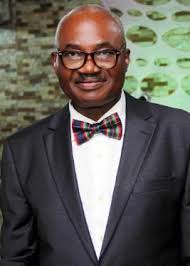
Leonard Shang-Quartey, Coordinator, Africa Water Justice Network
Leonard Shang Quartey is the Coordinator of the Africa Water Justice Network (AWJN), a pan-African coalition advocating for fair, sustainable, and people-focused water governance across the continent. He is widely known for his opposition to what he refers to as the commodification and privatisation of water, consistently advancing the view that water is a fundamental human right rather than a market good.
An online profile of his work states that: Through policy advocacy, grassroots mobilisation, research, and continental campaigns, he works with civil society groups, communities, and social movements to challenge corporate control of water resources and promote public, community-led alternatives.
The AWJN’s membership includes dozens of registered members across Africa, from countries such as Nigeria, Zimbabwe, Cameroon, Senegal, Kenya, South Africa, Ghana, and others, and it works in solidarity with a broader network of around 150 allied organisations regionally and globally.
In this interview, with Dr Babatope Babalobi of eWASH, Leonard voices his opinion on the controversial issues of water pricing, water privatisation, and other related issues on water service delivery in Africa.
He also advocated for the inclusion of water levy or tax as part of personal income or property tax, to enable all categories of users access it freely at the point of use.
What is water justice?
The whole concept of water justice is about bringing equity in access to water. That is ensuring that ordinary people and everyone can access water for their daily needs and also activities relating to their livelihoods. So water justice is about ensuring that there is access and the reason why it’s an issue now is because millions on this continent do not have access to water in this day and age with the highest technological advancements and improvements you can talk about, and we see we see this to be unfortunate and that is why we are working to contribute to realizing this justice, to realizing this equity in access to water for all.
So, if you are advocating for water justice, this presumes that there have been water injustices. Can you summarise the various kinds of injustices that have happened in the water sector?
The lack of equity that we have in terms of access to water for many people on the continent is not by accident. It is not natural, but then it is manmade and caused by some of the policies of the different governments on the continent, in terms of how water is perceived and how the framework is used for its delivery. It is some of these actions, policies, and perceptions about water that are causing this gap in access for many people.
For example, the push for the privatisation of water is one of these policies, and it doesn’t care about the consequences that such a policy would have on people without income. That policy says that water will be available for those who have the financial means to back their demand, and the implication from that also is that those without the financial means to back their demand will be without water, and that is what we are seeing arising from this policy.
But then the government has a responsibility of providing services beyond profits; the Government has the responsibility of securing the lives and livelihoods of its population.
And so while you’ll be looking at profitability, efficiency, and effectiveness, and most of these criteria, we should also be looking at the impact on people and the policy of privatization and the idea that if we don’t place a commercial value on water, people are bound to misuse and waste it does not hold in the face of the suffering of millions who do not have access to this commodity, and that is the kind of justice that we are demanding.
Please give us an idea of the structure of the African Water Justice movement and its Blue Communities Africa project. How is the network being operated?
The Blue Communities Africa project is a campaign and activity of the Africa Water Justice Network, and it is one of the tools we hope to utilise in achieving water justice. That is, building from below, influencing and encouraging communities to adopt and demonstrate the principles of water justice. So, it’s one of the tools of the water of the Africa Water Justice network. Even though there is something that has been around for some time, the origins are from the Council of Canadians and the Blue Planet Project. I initiated this particular initiative some years ago, and you now have blue communities in North America, specifically in Canada, Latin America, and Europe.
There are three key principles. One is the public declaration against the privatisation of water by the prospective blue community. The second principle has to do with the recognition of water as something that belongs to the Commons, and therefore, we need to have and share that in common as well. The third is the banning or phasing out of plastics as a means of packaging and carrying water. I’m talking about bottled water and then sachet water, which has become very popular now and is clogging the drainage systems of most African countries and also causing enormous damage to the environment beyond anyone’s comprehension. So these are the three basic principles of the Blue Community.
So this is one of the tools that we have adopted as the Africa Water Justice Network, in working to ensure that we have water justice and building from below. So yes, it’s not only the government that has to start, but the communities that have some influence on how they receive and share or have an influence on the usage of water within their domain and start demonstrating some of these principles.
What would you say are the major achievements of these Water Justice campaigns?
Firstly, the achievement we have made so far is reclaiming water from private management and ownership in countries like Ghana, South Africa, and Senegal. That campaign and consciousness that we continue to build is able to empower people to ask questions when such policies are put before citizens in the consultative processes. Usually, the privatisation policy of water is sell utilities to private firms, like how MTN is functioning. People can have access to their phones and make calls when they want because it is privatised and they are making nice profits, and that will happen to water too, if we privatise water.
Apart from reversing the trend of privatisation in some of these countries, I will say one of our major achievements is the continuous awareness and public presence that we create in the face of attempts to change that culture. How we perceive and relate to water, and I think that is significant and one of the key things. The activities seek to have a public presence that can scan and see some of these threats that attempt to change how we perceive and relate to water. That is what the Africa Water Justice Network has been doing.

When was the movement founded?
The Africa Water Justice Network was founded in 2022. The campaign on the continent has been going on for years; there was the World Water Forum in Senegal. There was a counter forum by the people in Dakar as well, and that was then known as the alternative World Water Forum. At the forum, two decisions came out, one relates to the foundation and formation of the Africa Water Justice Network, and the second one is the People’s Water Forum. So the Alternative World Water Forum now become the People’s Water Forum, which met recently in Indonesia. But then, since 2022, the African Water Justice Network, as a legacy of that forum, has been mobilising communities in different countries. Now we are present in about 14 African countries, where we are active, and we are trying to reach out to other countries.
So far, in West Africa, East Africa, and South Africa. In East Africa, Kenya happens to be one of the countries that we have very strong. Before the progress in that country, there was some strong opposition to the privatisation bill, and it not only relates to water but is just a bill that intends to privatise anything public. If the officials can justify it, which could affect water, then there was a mobilisation in that country. Unfortunately, the bill passed, and some of these frustrations could have led to some of the ongoing protests in that country.
Ghana has a rich history of water privatisation. So, what worked well, and what did not work well? What are the lessons other African countries can learn from Ghana in their attempts to privatise the water sector?
In Ghana, the diagnosis of the challenges we were having with water, which affected urban water and rural water as well, was that the public was inefficient and that the private sector would bring efficiency. That diagnosis left out a key factor, the factor being the lack of resourcing or resources for the public water provider. So this is an institution that has been stopped and has been trying to adapt and contain the situation of lack of resources, which resulted in a lot of frustration for citizens. But then the diagnosis by the World Bank and all the promoters of the privatisation was that it was a lack of efficiency. So with that diagnosis, they brought in a management contractor, Aqua Vitens Rand Limited (AVRL)
And because they did not touch on the key issue of resources for the institution, AVRL also ran into a similar problem. That is, a private contractor ran into a similar problem, and at the end of the contracting, the contract began somewhere in 2008, at the end of the contract in 2011, they could not deliver on the key benchmark. They failed woefully on benchmarks such as improving water quality benchmarks, reducing non-revenue water, that is, water losses, and improving collection revenue. So, you realise that it doesn’t matter who you put in there. If the tools and the resources that are required to provide water for the population are not there, nothing will happen.
We understand where the World Bank is coming from. After the huge debt issues that Ghana and many other African countries walked into, the World Bank wants its money. Therefore, the policy stops the flow of investment into the social sector and focuses on tidying up your economy to pay back your debts. And then the consequences for people. So that is the context in which you can understand. Ignore the social sector and focus on providing stability for your economy to pay back your loans, and that has been the direction of the World Bank since then, because the economy has not gotten any better.
The question is, what model would you recommend for managing a typical urban water utility in Africa, and where does that model work? In Africa or outside Africa.
I think before the financial crisis of the late 70s and early 80s, we had models that were working. For example, in Ghana, under President Nkurumah, as well as some of the succeeding presidents, we had an efficient public delivery. Then it was conditioned on them having the resources and tools to work. If you look at the degree and amount of connections that happened immediately after independence and expanding assets beyond the European settlements and elite settlements into towns, and even as far as some villages. We had a model that was working until the financial situation, disaster, and situation, and most economies of African countries have not been the same again. If you want to look at a model that can work, look at what some of these utilities were able to do in the past when they were well-resourced.
Don’t you think the model should be documented?
Indeed, there are documented alternatives. You do not have to privatise a water utility if it is facing a challenge. Just as people are clamouring for Public-Private Partnerships (PPPs), you can also rely on the expertise that exists in other publics. So, there could be an arrangement for that between the different governments, especially if you can scan and then see which country has the kind of expertise on the principle of solidarity.
There is also the other alternative, which we call the Savelugu, in the broader Northern Ghana region, focusing on sustainable solutions like the Sustainable Land and Water Management Project (SLWMP). This model that we documented here in Ghana from the community known as Savelugu out of their challenges and frustrations with access, they decided to take matters into their own hands, sit down with the public provider here, which was Ghana Water Company Limited, “we understand the challenges you are having and because of issues of revenue collection and even lack of resources on your side, you are not able to supply. Leave the management issues and supply issues to us; just supply the water, and we will deal with the management and supply issues. And this is a model that ran successfully for a time before it was corrupted by politicians.
At the Community level, these were people who were receiving bottled water and then in charge of its distribution and maintenance of the infrastructure that goes with it. Also, identifying those with needs and then making provision for such families. It was at the community level. There was a water board made up of people that the community members knew, and when there were problems, they were able to get the immediate attention of these leaders and have them discussed and resolved. A lesson from that is the decentralised community model. Let the Community step in.
Some also argue that the issue of water privatisation has been overflogged.. So, as a justice movement, what is your strategy for areas where privatisation is not an issue, but the utilities are still not delivering services?
Yes, I agree with you that privatisation is not the only issue. Corruption and accountability are two of the major problems of the water sector, and that is something that we have to confront and separate. So we can do both by pursuing accountability for the institutions charged with the management and delivery of water, and then also ensuring that these institutions remain public.
The second issue that we have to consider is the issue of non-performance of the public. Whenever that issue is raised, we have to look at the budget. I don’t know about the case of the states in Nigeria, but most of the time, if you look closely at the budget, you realise that the government’s priority is not reflected. The non-provision also pushed many of them into commercializing service. So, the lack of resources from the state can lead to two ways: privatised services or commercialised services. Besides the privatisation issue, there are other problems that our institutions are faced with, which need to be dealt with because we want the public to be efficient and effective. So, once we are saying no to privatisation, we are also saying yes to a sanitised public institution delivering quality services for people.
What strategies would you recommend to promote water integrity in the water sector?
What we are doing now, basically at the Africa of the Justice Network, is that we want the public to work. So, we have another leg of our campaign that is pursuing accountability of the public, and we use budget advocacy. So basically, doing the budget analysis, but then also doing the expenditures and then looking at the gaps. So, what is in the budget for this year? Where are these resources going? Are the resources adequate? We are looking at the accountability of the public because a corrupt public institution or water utility will not be of any benefit for the objective of realising that everyone has assets and various equity. The best way to achieve that equity is by having this fair habit without any condition that owes the people a responsibility, a responsibility not based on privilege, but rather based on the right that is held by the people.
There is an argument that even in Europe, there is no free water, and the water tax is already in the property bill. So what is your response to that?
We are not asking for free water. Free water has never been a demand but what we say is that it should be free at the point of use.
It doesn’t mean that the water is free, but how people pay for this water will be different. Our position is that at the point of need, when a citizen needs water, nobody should be asking for any charge or fees before accessing water.
So at the point of use, the water needs to be free, so it means that we should have other mechanisms of paying for that water. It could be a water levy or tax.
We should have a mechanism as a civilised society that ensures that when people are thirsty, want to clean up, cook, or drink, nobody should be saying there is no flow in your tap because you did not pay your bill.
We are looking at this alternative world, which is possible. It only takes the will of the people and their government to go in this direction, and other people are already in favour of such a thing. For example, when Ghana found oil, there was a discussion about how to equitably distribute the benefits of the oil well, so that every citizen could benefit. We proposed that water is something that everybody needs. So, if you want to have a way of ensuring that every citizen benefits from this oil resource, one way is to put some of the profits from that sector into a water plan. So, we have not asked for free water; we are asking for free water at the point of use. We recognise that it needs to be paid for.
Is it not the same thing? You are asking for free piped water.
It is not the same thing, so if I buy my fuel at the filling station and there is this amount of tax on it, presumably for the water sector. That is payment for the water I will be using later. For instance, in the health sector, we have the National Health Insurance Levy (NHIL) in Ghana, together with other monies that go into the purse, ensuring that when people have an emergency, and they need health care, there will be no cash and carry business. At least they will see a doctor, and they will have certain basic drugs. You can go with your National Health Insurance card, and then at the point of need, it is free. So basically, it is just about coming up with creative means to ensure the taxes that we are already contributing are put to use. They should be able to provide for these priorities: water, health, and education.
Don’t you think you should be arguing for free water only for maybe residents of slums and very low-income earners, the poor of the poorest people in rural communities, and urban slums, rather than people in medium and high-income areas?
That is the question that has often been asked, and it leads to governments needing to do means testing of people to know who has the capacity or not, and usually that discussion does not end, and it prolongs, and the poor cannot wait. So the basic answer to that is that we can provide for both the rich and the poor because, after all, they are all contributors to the taxpayers. So we can have it universal, and when we have universal, it is the poor that benefits most. In most of the means-tested initiatives that we have had, whether in scholarships, you realise that eventually, it is the elite that hijacks everything. So, educational scholarships are meant for poor and needy children, but then you look at the list and the Daughter of Minister A, the nephew of a legislator.
The surest way that we can guarantee that the poor have access is by making it universal

In Ghana, for instance, we have such a way to ensure that poor households have access to water at a reduced price, and it is based on the reasoning that poor households consume little water. With that assumption, there is a configuration of a system that builds those recording low consumption. The tariff is low for those households based on the assumption, but then the reality is different. The reality is that the poor usually live in compound houses; you have about five to eight people in a room, and then you have about 10 rooms in a compound. So, you could see the numbers benefit by making it universal because both the rich and the poor contribute to that.
In a country where the taxation system is not strong, What mechanism do you have, or do you recommend, so that people could be levied for the cost of water so that they can access free water at the point of use?
I think we are getting to the root of the problem. So you have a situation where we have weak domestic revenue mobilisation capacities and systems. We are not able to draw enough to meet the needs of the people, and this is the thought of those who have been put in charge of handling the situation. We are looking long-term. It means that we should be able to fix some of these challenges when it comes to domestic revenue mobilisation. If you come to Ghana, it is a big problem, and it will take a lot to tackle that particular issue, close to about 70% of the informal sector, if you relate it to the other sectors, and there is brisk business going on in the informal sector.
We only need a government, a tax collection agency that will sit down, have a long-term plan to identify, and then try to formalize some of these areas to realize enough to fund social services that nobody is prepared to do the difficult work, I mean the easiest one because most of these governments are only for four years and if they are lucky it is extended by another four years making it a total of eight years. So, there is haste, and nobody is sitting down to do the real work, so what they rely on mostly is indiscriminate indirect taxes. It is doable, but we are looking in the long term. We are looking at this vision of society that must exist, and that is what motivates us to continue with our work and to continue to remain in the public and have debates and then create the awareness that there are options like this.
What happens in the short term and middle term? What should be the strategy? Because granted that this may not work in the short term. What is the engagement strategy?
In the short term, we are trying to respond to some of the increasing commercialisation approaches by some of the utilities, and so putting pressure on the government to release enough, and that is why we have adopted the budget analysis as one of our campaign tools. So, this puts pressure on governments to release enough resources to water providers, and when they have enough resources, the cost of water also drops. In the meantime, these are some of the things that we are doing. The key objective is to realise enough government tax contributions that are based on what is available. Enough of it for the water sector.
How is the African Water Justice movement engaging with the informal water providers, who are dominating the space now?
Regarding the small-scale, private water providers or water vendors, I think we assess that it is a symptom of the bigger problem that we have. It is a symptom of the absence of government provision. Ordinarily, there should be an infrastructure with pipes laid and service line connections to the goals. Ideally, this is what we are supposed to have as citizens, but then that is not the case, and that is what has brought about the local water dependence. So they are filling the gap created by the government in its responsibilities. So we don’t blame them that much for the exploitation and the prices. The surest way to end the exploitation at that level will be the provision of the infrastructure that allows citizens to be able to enjoy water in their homes, as other countries have done; they are no different.
Other countries have been able to do that because they are collecting their taxes and using them. We should be able to do that in this part of the world. We see the private water vendors as the same thing, the larger problem, and the surest way of ending their exploitation at that level will come through a policy that we currently operate. Having enough resources and ensuring that local governments or organizations lower than the state level can provide services for people.
The water vendors are not the problem; they are just basically stepping in and taking advantage of a problem.
It is the quality of water that concerns us, whether it is from the public utility or other sources such as boreholes and others because in most cases there is no system for checking on this quality. Ordinarily, there should be a regulator somewhere assisting with this, but then that is what concerns us. Some of our members what they do is that they test the quality of some of these community water sources, and then issue reports and discuss with their communities. If there are remedial steps to be taken, that is an area where we can also assist the membership. The problem is that some of these kits are also not cheap, but with some of these water quality testing kits, people will be able to test water quality periodically, report on it, and then discuss it as a community where there are challenges. But then the biggest difference we can make is to affect policy that impacts some of these downstream challenges and problems that exist.
Don’t you think African Water Justice is marginalising sanitation issues?
I think your observation is right, and that has been one common critique that we found even from our membership. So that is something that we are looking programmatically to integrate into our work. You can not really talk about water without talking about sanitation, but then that is something that we are considering to deliberately add to our program of work.
Are there any final comments from you?
I would like to thank Bread of Life for this opportunity. We cherish any platform that we receive to extend our message because we believe that it is through public awareness and creating the right consciousness among the people that can help us push back some of these attempts to change our culture, the way we relate to water and perceive water. We see water as something that is for everybody, and we all have a responsibility to keep it safe.
You visit the average home in Africa, and the first thing you are offered is water, but these days that culture is changing because water has a price.
If we are not active in the public with our messages, things can change, and nobody will remember when water belongs to all, so I would like to thank you for this opportunity.
Do you have a message for African governments at the National and State level?
My message to the African government is that they should invest in the water sector and other social services; it is the right thing to do. That is where you will receive the most appreciation from the people. I will cite an example that was done in Ghana, this is where children of high school age get to attend high school free of charge, and it has been well accepted by the population. We are living in an era where most incumbent governments are not having it easy, but then, if not for that particular free high school policy, things would not have been well. In terms of the anger and frustration of the people, given the current economic challenges
So, investing in this water supply area is the right thing to do; you will get a lot of appreciation, but then we need to look at where the revenue will come from, and we can get a lot of that from the informal sector. We only need time to have a strategy on how to draw out these resources. It is possible to get these resources once we devote time; we should be able to fund these services. Thank you very much.
About the Author